Ken St. Andre (1947–2026): Remembering the Tunnels & Trolls Creator and Roleplaying Game Pioneer
One of the founding figures of tabletop roleplaying games, Ken St. Andre helped establish RPGs as an industry beyond Dungeons & Dragons. The creator of Tunnels & Trolls and co-designer of Stormbringer and the influential computer game Wasteland, has died aged 79.


Body
Kenneth Eugene St. Andre, the pioneering American game designer, author and librarian best known for creating Tunnels & Trolls, died on Sunday, 15th November 2026, aged 79. His death marks the loss of one of the most important creative figures from the formative years of the tabletop roleplaying games industry.
His passing was announced by his longtime friend and collaborator Steve Crompton, who confirmed that St. Andre had been battling cancer for more than a decade and had subsequently developed heart problems. His wife Rocio and brother Brian were by his side during his final days.
St. Andre was among the first generation of tabletop RPG designers, helping transform a new and experimental hobby into a broader creative industry. His work ranged from traditional fantasy adventures to science fiction, games centred on monsters rather than heroes, adaptations of established fantasy literature and pioneering computer roleplaying games.
Although his name will forever be associated with Tunnels & Trolls, a game first published in 1975, his influence extended far beyond its pages. Over a career spanning five decades, he worked with publishers including Flying Buffalo, Metagaming Concepts, Chaosium and FASA, helping establish many of the design ideas and approaches that subsequent generations of roleplaying games would explore.
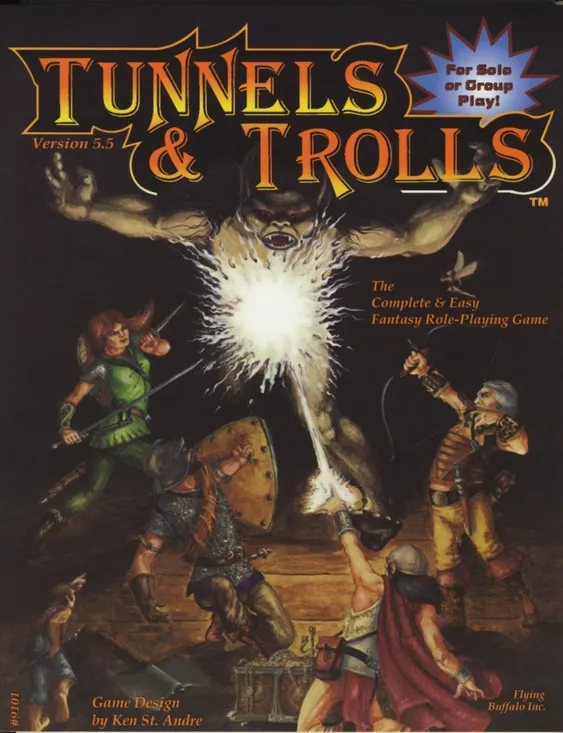
The creation of Tunnels & Trolls
The story of Tunnels & Trolls begins in 1975, just over a year after Gary Gygax and Dave Arneson's Dungeons & Dragons introduced the first commercially published tabletop roleplaying game.
St. Andre, already an enthusiastic reader of fantasy and science fiction, encountered the original Dungeons & Dragons rules and was fascinated by the idea of players taking on individual characters and exploring imaginary worlds. However, he found the actual rules difficult to follow.
The game's wargaming influences, complicated combat procedures, unusual polyhedral dice and spell memorisation system all struck him as unnecessarily cumbersome.
Rather than trying to adapt to those rules, he decided to create a game of his own.
In a 2016 interview with RPG Review, he recalled his immediate reaction:
"What a great idea! What a terrible way to do it! I will make a game that I can play."
The result was Tunnels & Trolls, a fantasy roleplaying game that embraced the fundamental concept of Dungeons & Dragons but approached its mechanics, presentation and philosophy very differently.
St. Andre initially self-published approximately 100 copies of the game in 1975. Rick Loomis of Flying Buffalo subsequently took copies to the Origins game convention, where they sold out, and Flying Buffalo became the game's longtime publisher.
While Dungeons & Dragons had created a new type of game, Tunnels & Trolls helped establish that this was not simply one publisher's invention, but an entirely new category of entertainment in which different designers could offer competing systems and creative visions.
Although the precise chronology of the earliest RPG publications remains a subject of historical debate, Tunnels & Trolls is widely recognised as one of the first commercially published tabletop roleplaying games and, crucially, the first enduring fantasy RPG competitor to Dungeons & Dragons.
Why Tunnels & Trolls mattered
The significance of Tunnels & Trolls goes well beyond its early publication date.
St. Andre wanted roleplaying to be accessible without requiring players to understand miniature wargaming or complicated rules systems. He deliberately built his game around ordinary six-sided dice, straightforward character creation and a relatively simple resolution system.
Combat involved opposing sides rolling dice and comparing their results, while the game's saving roll mechanic provided a flexible way to resolve dangerous situations and uncertain actions. Its magic system was equally distinctive, featuring memorable and frequently humorous spell names such as Take That You Fiend! and Hellbomb Bursts.
The game's tone was often more playful and irreverent than its contemporaries, with St. Andre recognising that fantasy adventures could be dangerous, exciting and dramatic without always taking themselves seriously.
It was this accessibility that became one of its greatest strengths.
Where early Dungeons & Dragons could feel closely connected to the miniature wargaming hobby from which it had emerged, Tunnels & Trolls offered an alternative entry point. It appealed to fantasy readers, younger players and people who were intrigued by the concept of roleplaying but intimidated by its apparent complexity. It also demonstrated that the personalities and creative preferences of individual designers could shape fundamentally different roleplaying experiences.
Perhaps its most lasting contribution, however, was the development of the solo roleplaying adventure. Beginning with Rick Loomis's Buffalo Castle in 1976, Flying Buffalo published adventures allowing individual players to explore dungeons, encounter monsters and make meaningful decisions without a games master or gaming group.
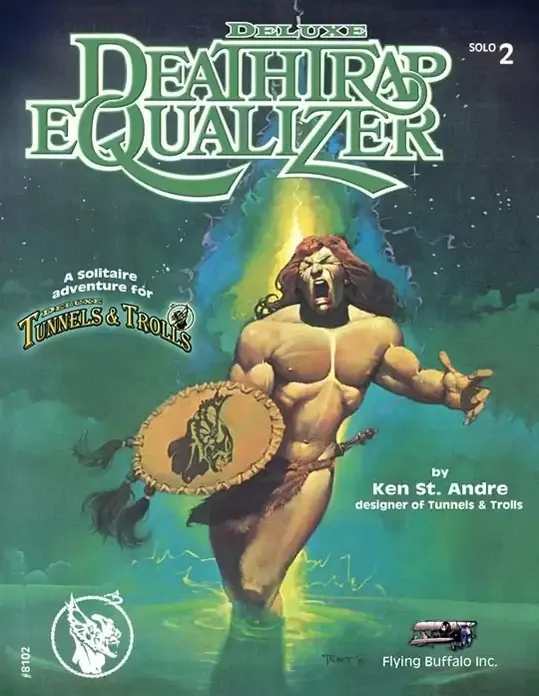
These books combined numbered passages, branching decisions and the full mechanics of a roleplaying game, creating an experience somewhere between a traditional tabletop RPG and an interactive gamebook.
The format became one of the most distinctive and commercially important elements of Tunnels & Trolls. It also provided a particularly effective introduction to roleplaying for people who had no local gaming community or who had never previously encountered an actual RPG - a group in which I count myself as I discovered solo gamebooks before ever hearing about actual roleplaying games.
In Britain, where the game was published Corgi Books during the 1980s, Tunnels & Trolls and its solo adventures reached a readership already familiar with the growing popularity of fantasy gamebooks, including the Fighting Fantasy series.
The game's solo adventures helped establish that roleplaying did not necessarily require a group around a table, an idea that remains particularly relevant to the modern resurgence of solo and journaling RPGs.
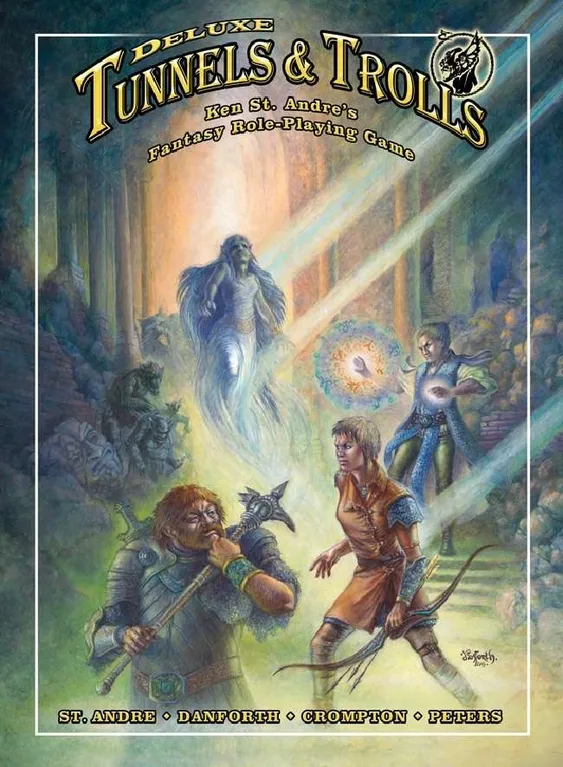
The game continued through numerous editions, including the major Deluxe Tunnels & Trolls edition released in 2015, demonstrating an extraordinary longevity for a system originating during the hobby's earliest years.
Monsters! Monsters! and Starfaring: Expanding the boundaries of roleplaying
St. Andre's experimentation did not end with Tunnels & Trolls.
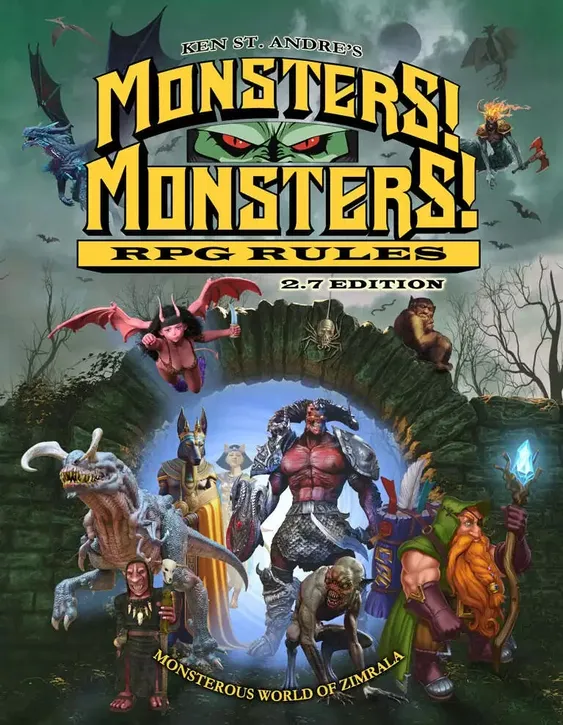
In 1976, he designed Monsters! Monsters!, published by Metagaming Concepts, with contributions from Jim "Bear" Peters and artwork by Liz Danforth.
The premise was remarkably straightforward but innovative for the period: rather than playing traditional fantasy heroes, players took on the roles of the monsters themselves. Trolls, ogres and other creatures normally encountered as opponents became playable protagonists, with their own motivations, ambitions and adventures.
The concept challenged one of the underlying assumptions of early fantasy roleplaying: that the player characters were necessarily the heroes and the creatures they encountered were necessarily the villains.
In later interviews, St. Andre spoke about his interest in exploring the perspectives of creatures conventionally portrayed as monstrous, questioning who had the authority to define someone else as a monster.
Monsters! Monsters! was decades ahead of many later games that explored unconventional protagonists and morally ambiguous characters. It remained important to St. Andre, who returned to developing the game during the later years of his career, collaborating with Steve Crompton on new editions and expanding its associated fantasy world of Zimrala.
The same year also saw the publication of Starfaring, one of the earliest dedicated science-fiction tabletop RPGs. Rather than simply transferring familiar fantasy adventurers into space, Starfaring approached its subject differently. Players assumed the responsibilities of starship commanders, exploring new worlds and encountering unfamiliar civilisations.
Published in 1976, it was part of the first wave of science-fiction RPG design, appearing around the same period as Metamorphosis Alpha and before the arrival of GDW's influential Traveller in 1977.
Stormbringer: Bringing Michael Moorcock's worlds to the tabletop
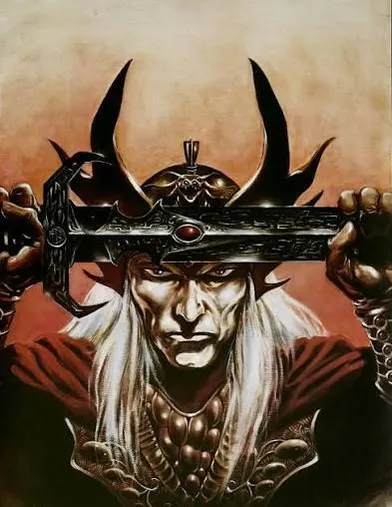
Another of St. Andre's most significant contributions came in 1981, when Chaosium published Stormbringer, its roleplaying adaptation of Michael Moorcock's Elric saga.
Co-designed with Steve Perrin, Stormbringer brought players into the dark fantasy world of the Young Kingdoms, where sorcery, demons, ancient empires and the eternal struggle between Law and Chaos shaped the lives of its inhabitants. Unlike the more whimsical approach of Tunnels & Trolls, Stormbringer reflected the bleak and morally complicated atmosphere of Moorcock's fiction.
The game used Chaosium's percentile-based Basic Role-Playing system, providing an experience quite different from St. Andre's earlier fantasy designs. Its distinctive magic system emphasised summoning and bargaining with demons and elementals, while its dangerous combat and morally ambiguous world captured the fatalistic character of the original novels.
St. Andre remained associated with the game through its early editions, and Stormbringer went on to become one of Chaosium's most recognisable fantasy RPG properties, eventually leading to the related Elric! game in the 1990s.
From tabletop games to Wasteland and Shadowrun
St. Andre's influence also extended into the developing computer games industry.
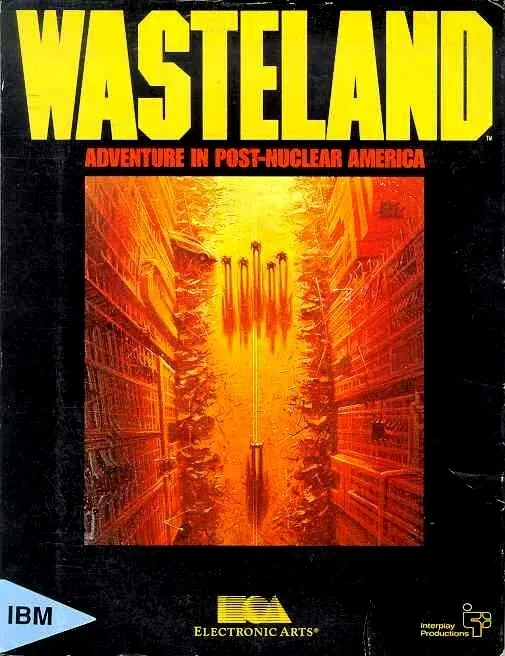
In 1988, Interplay released Wasteland, a post-apocalyptic computer roleplaying game that would become one of the most influential titles of its generation.
St. Andre was a key member of the game's design team, working alongside fellow tabletop creators Liz Danforth and Michael A. Stackpole.
Set in a world devastated by nuclear war, Wasteland offered players a combination of exploration, tactical combat, difficult decisions and a persistent game world that responded to their actions. The game was notable for its approach to player choice and consequences, bringing sensibilities associated with tabletop roleplaying into a computer environment.
Its influence was substantial. Wasteland became an important precursor to the Fallout series, while its own franchise was eventually revived decades later with Wasteland 2 in 2014 and Wasteland 3 in 2020.
St. Andre returned to contribute additional writing and design to Wasteland 2, connecting the original development team with a new generation of computer RPG players.
His other computer game credits included work connected to Stuart Smith's Adventure Construction Set.
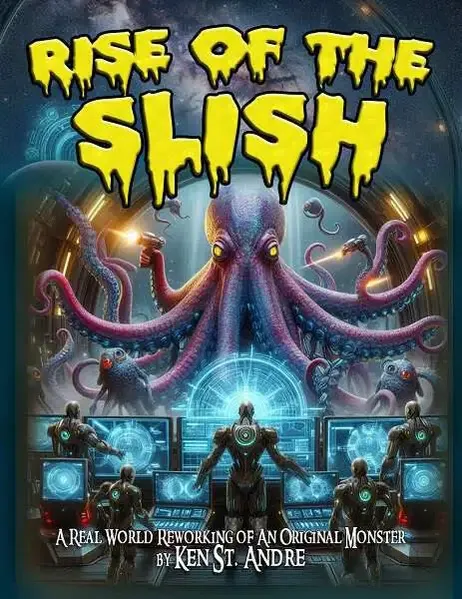
He also contributed to FASA's Shadowrun roleplaying game, most notably the acclaimed 1990 campaign anthology Harlequin. Harlequin, which involved several writers and designers, presented a series of interconnected adventures that gradually revealed a larger storyline. Harlequin subsequently received the Origins Award for Best Roleplaying Adventure of 1990.
A lifelong librarian, writer and creator
Although St. Andre was a recognised figure in the games industry, game design was not his principal occupation for much of his life.
Born on 28 April 1947 in Ogden, Utah, he spent much of his adult life in Arizona, where he worked for the Phoenix public library system.
He remained a public librarian for 36 years, retiring in August 2010.
His professional commitment to books and reading existed alongside an enthusiasm for fantasy, science fiction and imaginative storytelling that had begun long before Tunnels & Trolls.
In interviews, St. Andre recalled reading Robert E. Howard's Conan stories during the 1960s and creating his own board games based on Tarzan, John Carter and Star Trek before the commercial RPG industry existed.
His creative interests extended beyond game mechanics and adventure design. He wrote fantasy fiction, short stories, novellas, articles and blog posts, and remained involved in the wider science-fiction and fantasy community. He also developed a considerable body of material under his own publishing imprints, including Trollgodfather Press, and maintained close relationships with the small-press and independent gaming communities.
Among his many projects were adventures and settings such as Griffin Feathers, Rose of Stormgaard, Fungus and Fruitbat, Ogre Ochre and Dwarves and Dragons.
St. Andre frequently acknowledged the importance of collaboration. Tunnels & Trolls and its associated worlds benefited from the contributions of Liz Danforth, Jim Peters, Rick Loomis and numerous other creators over the decades.
His reputation was also shaped by his accessibility to fans. He participated in online communities, maintained blogs, corresponded with players and continued developing new material long after many of his contemporaries had retired from active game design. Including, over the last few months, regular updates that showed he was very much at peace with the knowledge of his limited remaining time.
Within the Tunnels & Trolls community he became known affectionately as the Trollgod, and later the Trollgodfather, a nickname that reflected both his place in RPG history and the mischievous personality of his work.
Later years and a continuing creative legacy
St. Andre remained active in game design during the 21st century. The publication of Deluxe Tunnels & Trolls in 2015, developed with several longtime collaborators, represented a major celebration and expansion of the game he had originally created four decades earlier.
Following changes in the ownership of Tunnels & Trolls, St. Andre increasingly concentrated on Monsters! Monsters!, a property to which he retained the rights. Working with Steve Crompton, he helped develop new editions of the game and associated supplements, expanding the fantasy world of Zimrala and continuing to explore the possibilities of monster-centred adventures.
His work retained an audience internationally, including an enthusiastic Japanese community that has continued to celebrate Tunnels & Trolls and related games through dedicated events.
His contributions received formal industry recognition in June 2018, when he was inducted into the Academy of Adventure Gaming Arts & Design Hall of Fame at the Origins Awards. It was an appropriate acknowledgement of a designer whose career stretched back to the very beginnings of commercial tabletop roleplaying.
The importance of Tunnels & Trolls has also been recognised through continuing efforts to develop and preserve the property, including the forthcoming Tunnels & Trolls: A New Age project published by Rebellion Unplugged.
Remembering the Trollgodfather
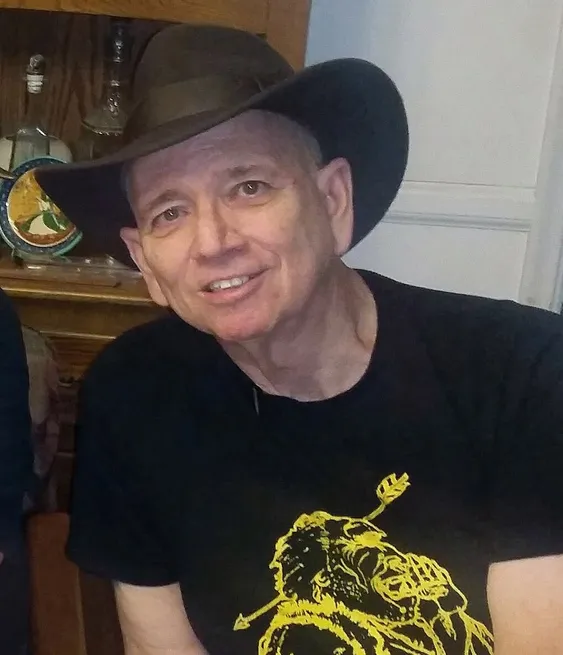
In his announcement of St. Andre's passing, Steve Crompton described him as a friend, mentor and business partner whose encouragement had helped numerous people establish their own creative careers.
Steve’s post read:
It is my sad duty to let you all know that Ken St. Andre, my friend, mentor, business partner and a prolific creative force in the world of Role-Playing Games, passed away Sunday November 15th at the age of 79.
He had been fighting cancer for over ten years and then his heart began to cause him troubles. Like an RPG adventurer, Ken had escaped death numerous times; run over by farm equipment as a child, serious car accidents, avoiding diabetes and more, but eventually every player misses a critical saving throw and must face the reaper.
His wife Rocio and brother Brian were there at his side, helping him and managing the situation heroically, and special love should go to them for all the care they provided to Ken at his difficult time. Ken faced it bravely and tried to stay positive. I visited him a week before he passed and we shared memories, a few chuckles and he gave me some life advice, which I shall follow diligently.
For those that don’t know, Ken created Tunnels & Trolls in 1975. It’s quite possibly the first true Role-playing game, it was based on characters and stories, rather than miniatures. Ken also created the rpgs Monsters! Monsters! Stormbringer, Power Trip, Humans! Humans!, plus the Wasteland computer game and other games. Ken was prolific and wrote a huge number of solitaire adventures, gm adventures, articles, fanzines, blogs, stories and even a couple of novellas.
He also helped bring other people into the field of fantasy and a fair number of them owe at least the beginnings of their creative careers to Ken, including Liz Danforth, Michael Stackpole, Rick Loomis, myself and no doubt numerous others. I know that Ken inspired many of his fans into creating their own worlds and adventures, the most recent being the growing fanbase of players & creators in Japan who recently had TrollCon2, which was devoted to Ken’s games and worlds.
I really can’t explain how much I will miss Ken. I first met him in 1980, when I worked in the Flying Buffalo store as a clerk. He certainly encouraged my efforts as an artist and I will always be in his debt for his kindness. The world of gaming will miss him as well.
I like to think that the Trollgod (his alter-ego) has permanently gone to the world of Zimrala, (a place Ken and I created after T&T was sold), where he will continue to explore and adventure there in our hearts and minds.
God rest Ken’s soul on his journey beyond the mortal realm…
The tribute reflected the close relationships St. Andre had maintained throughout his career, and the affection with which he was regarded by many within the gaming community.
A pioneer whose influence reaches beyond his games
Ken St. Andre's place in tabletop gaming history is secure.
He was not simply the creator of one of the earliest fantasy roleplaying games, nor merely a contemporary of the designers who established the hobby during the 1970s.
He helped prove that roleplaying games could exist as a diverse medium, with different systems, genres, audiences and creative philosophies.
Tunnels & Trolls demonstrated that fantasy roleplaying could be approachable, flexible and humorous. Its solo adventures helped expand the experience beyond organised gaming groups.
Monsters! Monsters! challenged assumptions about who could be a protagonist. Starfaring explored new approaches to science-fiction roleplaying. Stormbringer brought literary dark fantasy to the tabletop, while Wasteland helped carry the spirit of tabletop adventure design into the developing computer RPG industry.
Ken St. Andre helped open the door for generations of game designers, independent publishers and players who wanted to build worlds of their own.
His influence will continue to be felt wherever players pick up a handful of dice, embark on an adventure or decide that the game they want to play is one they can create themselves.
Ken St. Andre, 28th April 1947 – 15th November 2026.
Rest in peace, Trollgodfather.
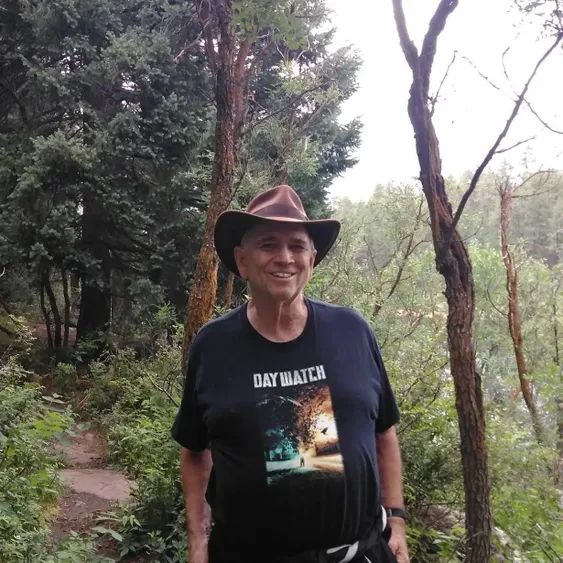
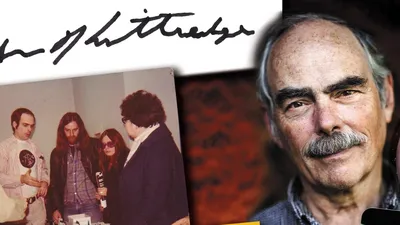
Photos courtesy of Ken St Andre & Steve Crompton
Join free or sign in to comment.