Nothing Worthwhile Should Come for Free
What if one of the biggest problems in modern RPG design is that players get too much for free?


Body
One of the most important principles in game design is that meaningful benefits should require meaningful costs. Player characters should be able to perform basic actions without spending additional resources, but when a game grants them extra advantages, inflicts additional consequences on their enemies, or hands them valuable assets, those benefits should come at a price. When designers give players something for nothing, they undermine the value of the resources and diminish the significance of the choices players make.
The Problem with Free Benefits
Every roleplaying game needs to establish what a character can do simply by taking a turn. Moving across the battlefield, making an attack, dropping an object, picking something up, or using an item are all reasonable examples. These are fundamental actions that let players participate in the game without having to pay an additional cost for every little thing they do.
The problem begins when designers start adding benefits that go beyond those basic actions without requiring players to make a meaningful investment.
Consider the Weapon Mastery system introduced in the 2024 edition of Dungeons & Dragons. Certain weapons grant additional effects when used to attack. Some can push a target automatically on a hit, others can impose Disadvantage on an enemy's next attack, and some can even allow a character to deal damage when an attack would otherwise miss.
These aren't merely different ways to describe an attack. They are additional mechanical benefits that can affect the outcome of combat. Why should a character automatically push an enemy across the battlefield simply because an attack hit? Why should striking someone with a particular weapon automatically make that creature less effective on its next attack? Why should a missed attack sometimes deal damage anyway?
I'm not arguing that these effects shouldn't exist. They're potentially interesting abilities that can make weapons feel different from one another. My objection is that they provide additional consequences without requiring the character to spend anything beyond the attack itself.
The character makes an attack, and the game hands them a bonus effect. There is no additional decision to make, no resource to expend, and no meaningful trade-off. The benefit is simply included in the price of admission.
Imagine instead that a fighter could attempt to shove an enemy as part of an attack, but doing so required sacrificing some damage potential, spending a limited resource, or giving up another opportunity. Now the player has a decision to make. Is pushing the enemy worth the cost? Is the tactical advantage worth sacrificing damage? Should the ability be saved for a more important moment?
That's game design. The player weighs the benefit against the cost and decides whether the exchange is worthwhile. When the benefit is automatic, that decision disappears.
Resources Give Choices Meaning
Resources are what make decisions matter. Hit points, spell slots, limited-use abilities, ammunition, time, and money all impose constraints on what a character can accomplish. Players must decide how to allocate them, when to conserve them, and when to spend them.
Remove those constraints, and you remove much of the decision-making that makes a game interesting.
This doesn't mean every ability needs a complicated resource system. A simple action economy is often enough. If a character can perform a powerful maneuver only by giving up an attack, that opportunity cost may be sufficient. If an ability is especially potent, perhaps it should consume a limited-use resource or require an expenditure that must be recovered. The important thing is that the benefit has a cost proportional to its value.
Without that cost, designers risk creating an endless accumulation of free advantages. Each new ability looks reasonable in isolation, but together they inflate character power and make encounters increasingly difficult to balance. The solution becomes giving monsters more hit points, higher Armor Classes, and stronger attacks, which leads to an arms race in which nobody really wins.
A well-designed system makes players think about what they're doing, not merely which options they can activate without consequence.
The Same Principle Applies Outside Combat
This problem isn't limited to character abilities. It also applies to the way roleplaying games handle wealth, property, and other long-term rewards.
Consider the Bastion system in the 2024 edition of Dungeons & Dragons. Characters gain access to a Bastion as they advance in level, receiving property and facilities as part of their progression.
The idea of giving characters a home base is appealing. It creates opportunities for roleplaying, provides a place to store equipment and interact with allies, and gives characters a stake in the world beyond their next adventure. But why should real estate simply be handed to characters as a function of level?
A character's level represents experience and capability. It doesn't necessarily represent wealth, and it certainly doesn't explain how a character acquired a building, paid for its construction, or hired the people needed to operate it.
More importantly, handing out property misses an opportunity to give players a reason to spend their money. One of the longstanding problems with fifth edition Dungeons & Dragons is that characters can accumulate substantial wealth without having enough meaningful things to spend it on. Earlier editions offered more opportunities to invest treasure in magic item creation and other expensive projects. In fifth edition, magic item pricing remains subject to substantial Game Master discretion, including decisions to restrict access to particularly powerful items.
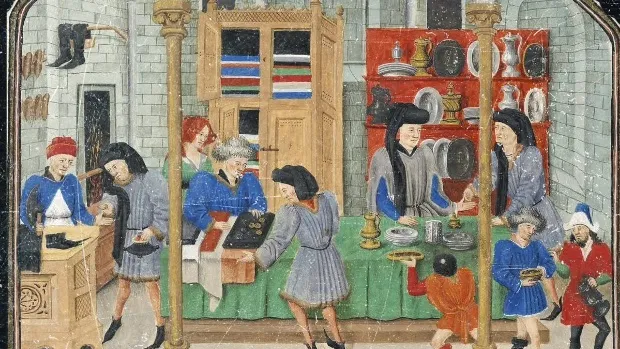
That leaves players with piles of gold and relatively few ways to turn it into something they actually want. Why not let them buy property instead? Perhaps a character wants to open a tavern, restore an abandoned smithy, establish a trading post, or build a fortified manor. Another might want to purchase a modest home in a city or invest in a fleet of merchant ships. Not every character needs a castle, and not every campaign needs a complex domain-management system. What matters is that the player decides what to acquire and invests the resources necessary to make it happen. The property becomes a reward the character has earned through choices and sacrifices, rather than another benefit automatically granted by a level-up.
Make Players Earn Their Advantages
This principle extends beyond combat and real estate. Whenever a designer considers introducing a new benefit, the question should be straightforward: What does the player have to give up to get it?
The answer might be money, time, an action, a limited-use ability, an opportunity to do something else, or the risk of failure. Not every benefit needs a direct numerical price, but meaningful advantages should involve meaningful trade-offs.
Free benefits can be appropriate when they're necessary to make a game function or when they're deliberately part of a character's identity. But designers should be cautious about adding automatic advantages simply because they seem exciting or make a character feel more powerful. Every benefit has consequences for the larger system. When players receive too much without giving anything up, resources lose their value, decisions lose their weight, and balance becomes harder to maintain.
Good game design isn't about handing players everything they want. It's about giving them meaningful choices and making those choices matter. If an advantage is worth having, it should be worth paying for.
Artwork from Strongholds & Followers by Legendary Games.
Sign up free or log in to comment.
What does fun actually mean in an RPG, and should designers even be trying to maximize it?

Shopping pre-loved is a great way to build a gaming collection on a budget, but where can you look for the best deals on recent releases and older gaming relics?