The Most Dangerous Word in Game Design: "Fun"
What does fun actually mean in an RPG, and should designers even be trying to maximize it?

Body
What is fun in a tabletop roleplaying game? It sounds like a simple enough question, and I’ve even had debates with colleagues I respect where the use of the word gets thrown around liberally. The problem with this is that when someone takes the position that “X mechanic is fun and Y mechanic isn’t,” that effectively shuts down meaningful conversation about it. Who gets to decide what fun is, anyway? It is, essentially, the equivalent of pulling rank and saying that you know better than the other person what people prefer to play. When the conversation reaches this point, you are forced to either agree that they’ve managed to define the fun or you disagree. The thing is that both or neither of you might actually be right.
The truth of the matter is that “fun” doesn’t actually mean anything. It’s too broad a term to be useful as a design metric because different players want radically different play experiences. The various things they’re looking for include tactical mastery, storytelling, exploration, danger, optimization, absurdity, social interaction, and immersion (it’s entirely possible that this isn’t even a comprehensive list of the most popular player “wants”). Not everything is going to be fun for every group of players; in fact, a mechanic can be “un-fun” to one group precisely because another group loves what it does.
A more interesting question we should be asking as designers us “What experience does it create?” Instead of asking whether a mechanic is fun, we should be asking, what does it encourage players to do? What decisions does it force the players to make? What emotions does it produce? What behavior does it reward? What does it make the players care about?
A mechanic that creates tension, frustration, uncertainty, dread, or even boredom isn’t automatically bad. Those experiences can be intentional and valuable, depending on the type of play experience you are trying to create. The real question becomes whether or not the mechanic is producing the experience the designer intended.
And while thinking about uncomfortable experiences, let’s talk about failure. Failure often isn’t fun. Missing an attack isn’t fun. Losing a character isn’t fun. Having your carefully constructed plan collapse isn’t necessarily fun. Yet eliminating those things would make most RPGs worse. The experience of danger is a key component of an RPG, even if the individual moments creating it may be unpleasant.

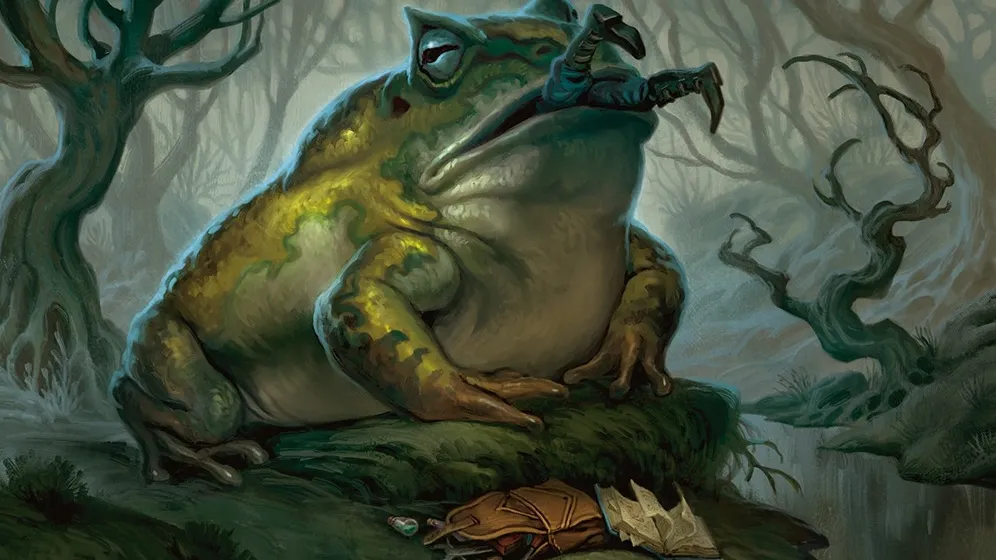
As an example, I’m in a semi-regular 2nd edition AD&D game with Paizo Publishing’s Erik Mona and other RPG professionals, and I play a fighter named Dante the Un-immolated. Erik is currently running us through Keep on the Borderlands, and we’re at the point where we take on the lizardfolk mound in the swamp. Well, things got real very quickly after we entered. Not only did we have to face a lizardfolk shaman and some of the guards as soon as we walked in, but there were also toads in the room. Things were running smoothly until the shaman cast Entangle. Those of us who failed our saving throws were anchored in place and had to resort to missile weapons. OK, no big deal. We still defeated them. Then we had to wait for the Entangle to wear off. When it did, we found another three lizardfolk guards just a few squares further in, along with a couple giant frogs. In case you don’t remember back that far, giant frogs in 2nd edition AD&D could swallow you whole. The frogs were in the standing water about ten feet lower than the path we were on, and the new lizardfolk were on the other side of a water-filled gap in the path. And this is the point where things became interesting.
Most of the party decided it was time to make a tactical retreat. Dante, the Unimmolated, believing that D&D is his own personal action movie, decided to jump across the water and attack the lizardfolk with my bastard sword. I was asked to make a Dexterity check. And… guess what? As a fighter, I had put most of my points into Strength and Constitution instead of Dexterity. I failed the roll. My act of heroics became an act of desperation as I missed the jump and fell flat on my back in the water below, taking minor damage. And that was when the nearest giant frog decided I looked like lunch. It attacked me with its oversize tongue and stuck me square on the face and started dragging me in. At this point, my allies decided I need help, particularly the female dwarf Holga, who ran into the water and swatted the frog’s tongue away with her Warhammer. I was free for a moment, but then the other frog got me with its tongue and dragged me in. Meanwhile, the frog that had had hold of me grabbed Holga and promptly swallowed her. A round or two later, her Hit Points were gone and she was on the verge of death.
Dante, now having failed a jump, and failed to avoid two frog tongues, was swallowed as well. But, this was not the end of our intrepid Wisdom-impaired fighter. I grabbed my sword and started chopping my way out from the inside. A round and three hits later (the last of which was a critical), I depleted its hit points, crawled out of the rubbery monstrosity, brushed frog guts off my armor, and delivered the one-liner, “It ate someone who disagreed with it.”
Now, at that point Holga was almost dead. But she had come charging in to save me, so I was compelled to do everything I could to save her. I grabbed one of my healing potions, jumped into the mouth of the frog that had Holga, and poured it down her throat. I then had to go to work cutting my way out of yet another frog. Meanwhile, the rest of the party was engaged with the remaining lizardfolk.
The point of sharing this is to illustrate how fun and failure and near death can absolutely be a lot of fun. Dante’s first inclination was to jump across and lay waste to some lizardfolk guards, but he failed his jump attempt. That was the first failure. After landing in the water, he failed to avoid getting swallowed by the giant frogs. That was the second and third failure. At that point, you could argue that he was on an unlucky streak, but it ended up leading to one of the most epic battles scenes since the campaign started. Failure meant that things didn’t go the way I wanted them to initially, but the consequences of those failures absolutely enhanced the fun. Incidentally, we all made it out of there alive.
So this anecdote aside, let’s talk about where designers go wrong. Designers sometimes remove mechanics because playtesters say, “I didn’t have fun.” While that’s useful feedback, it’s not necessarily a design verdict. Why didn’t they enjoy it? Did the mechanic create the wrong experience, or was it just an experience that particular player didn’t appreciate? Was the experience appropriate but poorly executed? Did it conflict with the group’s usual play style? Was the player frustrated because they made a meaningful mistake, or because the rules simply wasted their time? Here’s the thing:
Player feedback is data, not necessarily instructions.
The designer’s job is not to manufacture fun. A designer doesn’t get to dictate what players enjoy. What a designer actually does is create a machine that produces specific play experiences, and whether they like it or not, players bring their own preferences and experience to that machine. The designer’s job is to understand the consequences of their mechanics and deliberately shape the experience. Maybe making players uncomfortable is the point (this is certainly true in a horror game). Maybe making the players decide which tactical decision is best is the point. Maybe the designer has just created a beer and pretzels dungeon crawl game and neither of those things should be the point.
Fun is an outcome. It isn’t a design mechanic. “Fun” sounds like the ultimate goal of a TTRPG, but its actually too subjective and imprecise to be a useful design target. The better questions are: what do I want my players to experience? What do I want them to think about? What choices do I want them to make? What emotions should the game evoke? The bottom line is that a game designer’s job isn’t to decide what is fun, but rather to create an experience and give players the opportunity to decide for themselves whether or not they enjoy it.
Images courtesy of Wizards of the Coast
Join free or sign in to comment.
Why Grinding Doesn’t Enhance the Fun and How To Fix It

What if one of the biggest problems in modern RPG design is that players get too much for free?
What does fun actually mean in an RPG, and should designers even be trying to maximize it? #criticalHitsADesignersPerspective #darrinDrader #rpgs #adandd #dungeonsAndDragons #gameDesign