Asmodee Access+ Expands Its Mission to Make Board Games More Accessible
From adapted editions of familiar favourites to accessibility across its studios, Asmodee’s latest initiative could influence how future board games are designed.

Body
Getting people around a gaming table involves more than finding a game everyone wants to play. Small print, difficult-to-handle components, unclear rules or information conveyed through colour alone can all create obstacles to participation.
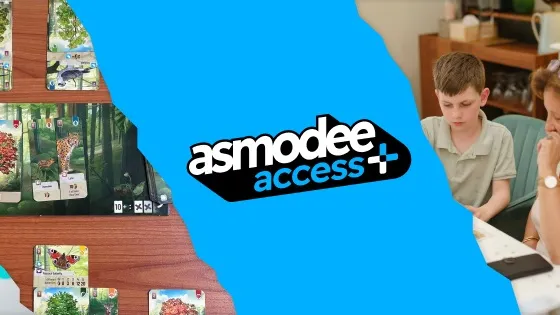
Asmodee’s expanding Access+ initiative aims to address those barriers. Following SPIEL Essen 2026, the company formally announced a new free online resource hub on 27th October, alongside a broader programme intended to embed accessibility into game development across its studios. It signals a major evolution for a project that began four years ago with adapted versions of some of their established games.
How Access+ Began
Asmodee announced the Access+ studio in May 2022, initially focusing on adapting popular board games for people living with cognitive disabilities.
The project drew on work by Asmodee Research and an external scientific committee of care professionals. Its opening selection of titles included Dobble (also known as Spot It!), Cortex and Timeline, with releases initially in France, Belgium and Canada.
The initiative began as a range of games for people living with cognitive disabilities such as dementia, autism and learning disabilities. It is now being extended across asmodee’s creative studios,. where it will shape how games are designed as well as how they are played. It has been developed with researchers, healthcare professionals and accessibility specialists, and aims to reduce the motor, sensory and cognitive barriers that can stop people taking part.
The adaptations addressed both the physical games and the ways people played them. Larger, thicker cards made components easier to handle, while revised rules, different difficulty levels and solo options offered additional flexibility. Accompanying booklets, written with scientific experts, explained the potential benefits of each game.
All the changes were practical and with a social purpose, making the adaptations so familes, friends and carers could help players participate with greater confidence and independence.
A Mission Built Around Shared Play
The current Access+ website expresses its guiding belief simply as: “Everyone should benefit from the power of play”.
asmodeeaccess.com brings together tools for players, families and friends, teachers, caregivers and healtchcare professionals. Visitors can explore:
A seclection of games with information about their accessibility features and the skills engaged by their mechanics, helping visitors make informed choices.
Game guides offering advice on facilitating play and suggestions for adapting games to participants needs.
Printable resources and accessory recommendations to make handling components and communicating easier, or to improve comfort during play.
Articles connecting play experiences with insights from research.
Its mission combines improving the accessibility of games with helping more people enjoy playing them. That means considering components and rules alongside the setting, introduction and support surrounding a gaming session.
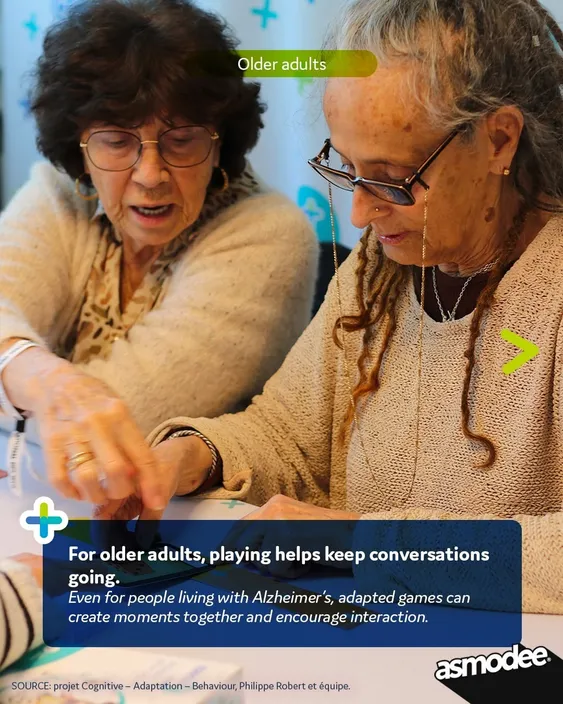
The programme now takes a broader view of accessibility, recognising motor, sensory and cognitive barriers, as well as social and situational factors. Its audience includes players, families, educators, carers and healthcare professionals.
Accessibility also varies between individuals. A card holder might help someone who finds holding a hand of cards difficult. Clear symbols might assist someone who cannot easily distinguish particular colours. A quieter setting might allow a player to participate more comfortably. So what support a particular player needs to enjoy a particular game can change a lot between one person and the next.
What Has Asmodee Announced?
The biggest development is a change in scope. Access+ is evolving from a dedicated range of adapted games into a company-wide initiative intended to influence how Asmodee designs games and supports play going forward.
Asmodee says it is developing science-based accessibility guidelines alongside researchers, accessibility specialists and its creative studios. The intention is to give designers practical recommendations for reducing barriers during development, supported by adaptations and accessories where appropriate.
Announcing the expansion, Arianna Ryan, Asmodee’s Chief People Officer and EVP Sustainability, said:
With asmodee access+, we want to make accessibility a shared practice that drives change across our industry. This means providing tools for our studios, as well as practical guidance and solutions for players. Our vision is to celebrate all players with shared experiences, and this new hub reflects that ambition: to help more people find their place around the table and share the joy of playing.
For players, the most immediate development is asmodeeaccess.com, a free hub bringing together information about games, accessibility resources and ways to support participation.
The selection includes titles such as Dobble Giant, Just One, Chromino and Match Madness, alongside accessories including card holders, card lifters, tactile markers and noise-reducing headphones. A printable Game Word Book uses words and visual symbols to support communication during play. The site acknowledges that different players need different solutions, and that no single accessory will suit everyone.
The hub is still developing. At the time of writing, its dedicated game guides are labelled “coming soon”, so more material will be added in due course.
Why This Matters for Tabletop Gaming
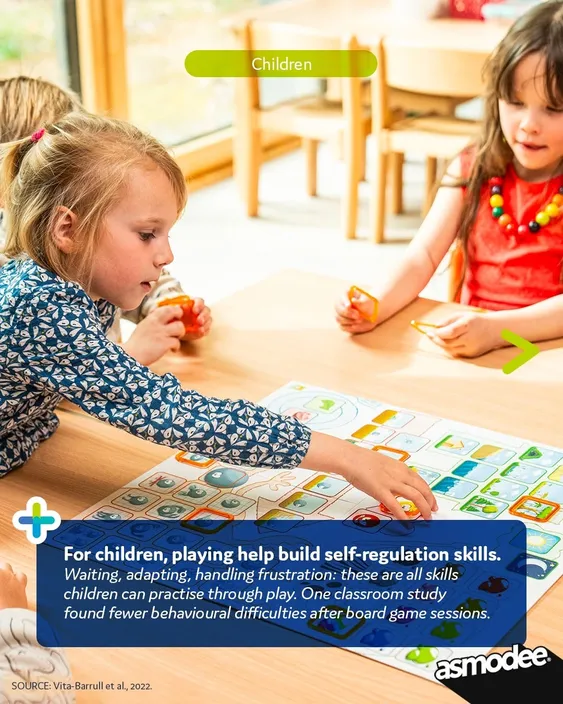
Asmodee carried out a survey of over 1,5000 players, finding that over a quarter (25%) of them reported mental health or neurodiversity conditions. Tabletop games also show strong support in helping social development across different age groups, foster communication skills, and help reduce depression. Games have an important social factor to them, bringing people together and having a fun shared experience, so being able to make that experience one more can share is important.
In looking at accessibility early in design process helps significantly on a number of levels. For instance, consider a game that distinguishes resources entirely through colour. Including symbols during development could make those resources easier to identify for more players. Once the game has been manufactured, achieving the same result may require stickers, replacement components or a workaround created by the group.
Similar considerations apply to text size, contrast, component handling and rules presentation. Early decisions can influence how independently someone can play and how much assistance they need.
Asmodee’s reach gives the initiative the potential to spread useful practices across numerous studios and releases, well beyond their own stable. Better accessibility information could also help retailers, clubs and event organisers recommend games with greater confidence.
The Next Test Is Delivery
The announcement establishes a direction. The next stage will show how consistently Asmodee follows it.
Completed guides, specific information about accessibility features, visible improvements in new releases and meaningful involvement from players who experience these barriers would all provide evidence of progress.
There will also remain a place for individual adaptations and specialist editions. Different needs require different approaches, and broader accessibility should give players more useful choices.
Access+ began by adapting familiar games so more people could share them. Its expanded mission now asks Asmodee’s studios to carry those lessons into everyday development. If that produces sustained improvements, the results could be felt wherever people gather to play with more players able to choose a game, understand it, handle its components and take their place around the table.
Sign up free or log in to comment.